A welcome return turns into an unexpected challenge
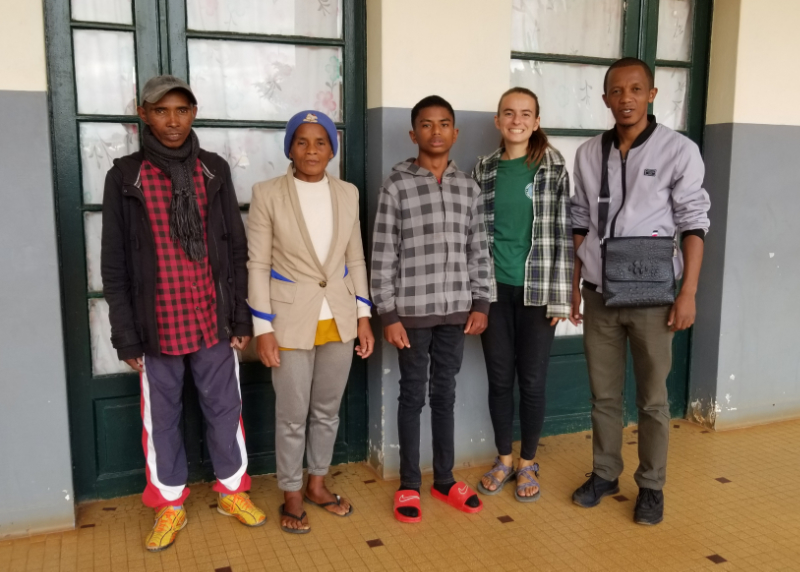
From left to right, Mandimby’s parents, Mandimby, Vanessa and SEMAFI Director Donatian celebrate Mandimby’s discharge from the hospital.
When I learned 17-year-old Mandimby was wheezing throughout the night, I knew he needed to see a doctor.
Donatien, SEMAFI’s director, called his mother and we made a plan to take him to the pulmonologist at Tambohobe University Hospital in a few days.
At the time, we didn’t realize just how serious his condition was.
In past incidents, his wheezing stopped by morning, allowing him to continue his studies in the vocational training program, where he learns income-generating skills like sewing and cooking. But when the day came to go to the hospital, Mandimby sat in bed struggling to breathe, hardly able to leave the boys’ dormitory.
After his mom arrived, we rushed him to the hospital where doctors soon began performing emergency treatment to improve his breathing.
At the hospital, an x-ray revealed Mandimby had a serious case of pneumonia impacting 75% of his right lung. The doctor told us she suspected it had been developing for months.
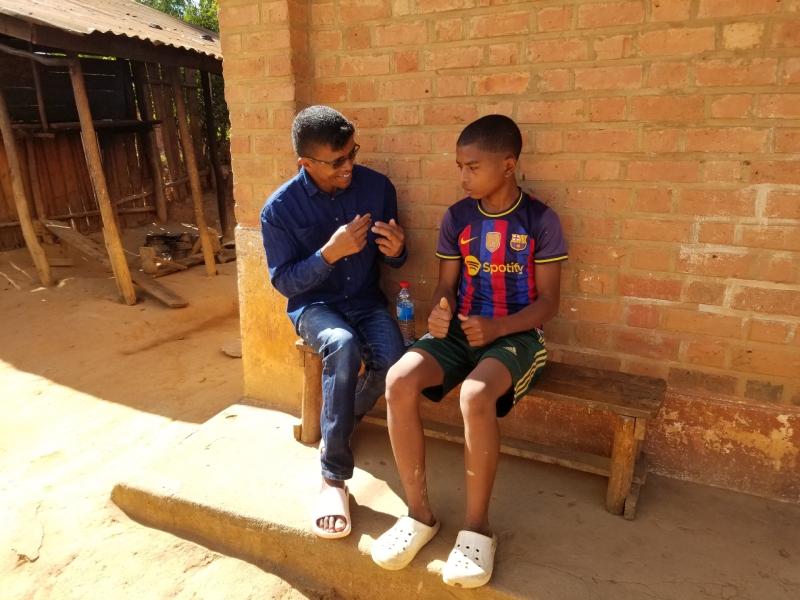
Mandimby had returned to school just a week before after a three-year absence. He had previously studied at SEMAFI, finishing at the top of his class in 2023, but was unable to return the following year because his family could no longer afford the cost of his education.
After seeing some of the older boys at SEMAFI talk about him, Donatien and I decided to visit him at his home to ask whether he might be interested in returning to school with support from Meylou.
Mandimby was excited, but he had some doubts. Would he know any of the students? Would he be too old? Would he be able to understand the materials taught in class?
Ultimately, with some reassurance from SEMAFI’s cook, Liva, he agreed to return. Days after arriving, two friends of mine from the Peace Corps agreed to sponsor his education and healthcare costs.
After Mandimby was admitted to the hospital, Donatien and his wife, Hanta, brought everything he would need: bed sheets, soap, toilet paper, a chamber pot, and more.
In Madagascar, hospitals don’t provide meals for patients, and families are responsible for purchasing medicine and supplies at the hospital pharmacy. I returned to Tambohobe every day to buy his medicine, talk with his doctors, and bring water and snacks. SEMAFI staff members took turns bringing Mandimby and his family meals, morning, noon, and night.
Mandimby’s mother stayed by his side during his treatment, spending every night sleeping on a mattress from SEMAFI on the floor beside his bed.
Ten days later, after seeing significant improvement in his breathing and lungs, his doctor gave her approval for Mandimby to return home. The doctor told me she was happy to see his progress. Most patients admitted to the hospital leave early because their families can’t afford to finish their treatment, she said.
Mandimby went home with his family with medicine and two new inhalers in hand.
After 10 days in the hospital, his medical expenses totaled nearly $350, a huge sum in Madagascar. Meylou covered the full cost of his treatment and will continue providing follow-up care while he remains a student at SEMAFI.
Mandimby’s experience helped highlight a larger need among SEMAFI students. After his hospitalization, we brought a few students with breathing problems to the doctor and identified another student with a serious, untreated medical condition which will require surgery.
Few people in Madagascar have full access to the healthcare they need, and SEMAFI students are no exception. As our support for students grows, providing access to medical care at all levels will continue to be a core focus of our work.